Emmanuel Nwafuru
Full-stack developer, one year into building AI-powered systems for real businesses — and looking to build a lot more.
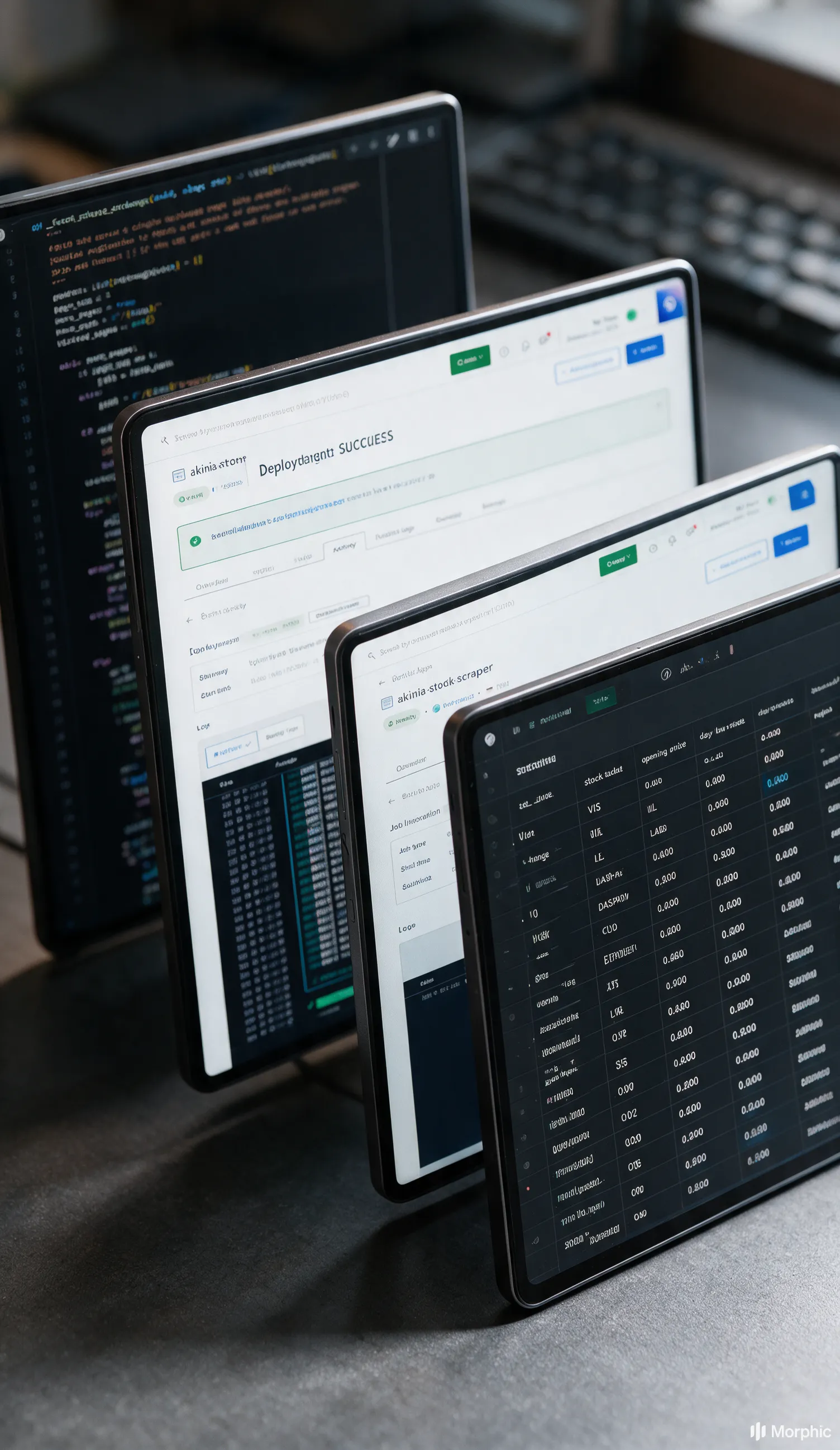
Akinia Platform Engine
1 Year
Building AI-powered systems in production for a live financial intelligence platform.
Shipped
AI features that ran in real production, watched real usage, and learned what actually matters.
From live financial platforms to standalone engineering practice.
A transparent, step-by-step breakdown of how real production work formed the foundation of this practice.
I'm a full-stack web and app developer. For close to a year, I worked as the developer behind Akinia, a financial intelligence platform — building the core web application, the automated systems that fed it data, and an AI-powered search feature that shipped, ran in production, and was eventually retired when the product direction changed.
Automated Data Pipelines
Continuous market data ingestion
Core Web Application
High-performance financial interface
AI Search Feature (RAG)
Intelligent financial queries in production
"Is this AI feature actually load-bearing, or is it decoration?"
That last part matters more than it sounds like it should. A lot of people talk about AI in the abstract. I've shipped an AI feature into a real product, watched real usage, and watched it get sunset — not because it didn't work, but because that's what happens in a real business: priorities shift, and not every feature survives the roadmap. That's a different kind of experience than a portfolio project built in isolation, and it's the kind of judgment I bring into every engagement now: is this AI feature actually load-bearing, or is it decoration?
Before and alongside that, I've built for two early-stage companies — full-stack platforms, e-learning products, and marketing/landing sites — learning the parts of the job that never make it into a tutorial: what breaks under real users, what a non-technical founder actually needs explained, and how to ship something that still makes sense to maintain a year later.
What breaks under real users
Stress testing, edge cases, and user flow resilience.
What non-technical founders need
Translating complex systems into clear decision points.
Maintainability year after year
Clean architecture without debt or black boxes.
Current Pain Point
"We're drowning in manual data entry"
Engineered Outcome
Working automated system in production
I'm now building this — a proper, standalone practice — because I've seen from the inside how much of the "AI opportunity" that businesses hear about is still sitting completely untouched. Not because it's technically hard. Because most businesses don't have anyone in the room who can translate "we're drowning in manual data entry" into a working system. That's the gap I'm building a career in closing.
HOW I WORK
A few things I actually believe
about this work
AI is a tool, not a pitch.
If a spreadsheet and a cron job solve your problem, I'll tell you that instead of selling you a chatbot.
Boring, reliable code beats impressive, fragile code.
The best compliment a system I've built can get is that nobody thinks about it, because it never breaks.
You should understand what I built for you.
No black boxes, no vendor lock-in you didn't agree to, clear documentation on handover.